The short answer
Clearing and moving a loved one's home is among the hardest things a family faces — practical, compassionate guidance for when the time comes.
Few experiences in life are as emotionally layered as sorting through the home of someone who has died. Every drawer holds a memory. Every familiar smell is a grief trigger. And beneath the profound emotional weight of the process, there are real practical decisions to be made: what to keep, what to pass along to family members, what to donate, and what to do with a lifetime of accumulated belongings that do not fit neatly into anyone else's home. If you are facing this task — whether as the surviving spouse, an adult child, or another family member — please know that there is no right timeline and no correct way to feel. What follows is practical guidance, offered gently, for when you are ready to take the next steps.
Begin, if you can, by giving yourself permission to go slowly. There is rarely a hard deadline that requires the home to be cleared overnight. If there is a lease or estate timeline that must be honored, identify the hard deadline and work backward from it, but try to create as much buffer as possible. Start with the least emotionally charged areas — perhaps a garage, a guest bedroom, or a storage closet — rather than the bedroom or a personal study. This allows you to build momentum and develop a rhythm for the process before you encounter the items that require the most emotional bandwidth. Recruit help: trusted friends or family members who can be physically present not just to assist with packing but to bear witness to the process with you.
For items of significant financial value — antiques, jewelry, artwork, coin collections, or real estate — consult an estate attorney or a certified estate appraiser before making distribution decisions. Sentimental items that multiple family members want should ideally be discussed in a family conversation rather than decided unilaterally. For the majority of items, the practical categories of keep, donate, and discard are sufficient. Organizations like Household Goods in Acton, the Salvation Army, and local hospice charity shops often specifically serve families clearing out estates and approach donations with sensitivity. Many will arrange pickups, which relieves the logistical burden of transporting donations.
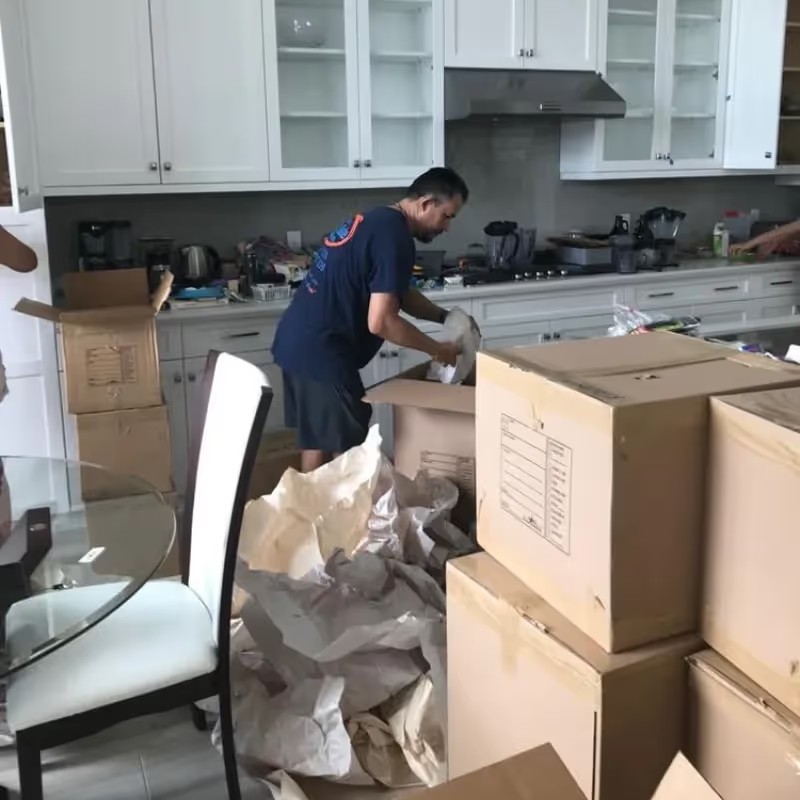
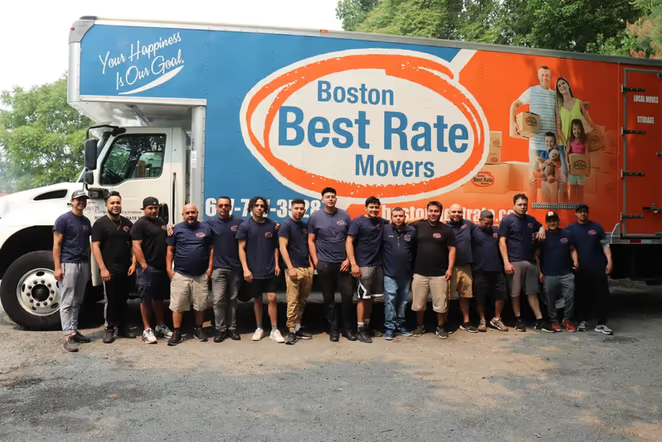
When the time comes for the physical move, choose a moving company with experience handling estate clearances and bereavement moves. Boston Best Rate Movers has worked with many families through this process, and our crews understand that this work requires a different kind of care and patience than a standard residential move. We work at your pace, handle belongings with respect, and understand that unexpected pauses and emotional moments are part of this kind of day. If you are moving a surviving spouse to a smaller home or assisted living, coordinate early with the destination facility about move-in procedures, elevator access, and what furniture and items they can accommodate. The goal throughout is to preserve what matters — both the physical items that carry memory and the emotional wellbeing of everyone involved.
Estate & Bereavement Move FAQ
How long do we have to clear a loved one's home?
There is rarely a hard deadline unless a lease or estate timeline requires it. If one does exist, identify it and work backward with as much buffer as you can; otherwise, go at your own pace and start with the least emotionally charged rooms first.
Can movers handle an estate clearance with donations?
Yes. We move at your pace and can coordinate donation drop-offs as part of the job. Organizations such as Household Goods in Acton, the Salvation Army, and local hospice shops often serve families clearing estates and will frequently arrange pickups.
Do you move someone into assisted living or a smaller home?
Yes. Downsizing a surviving spouse into a smaller home or a senior-living community is routine work for us. Coordinate early with the destination on move-in procedures, elevator access, and what furniture they can accommodate.
Will the crew be patient and respectful?
Yes. Our crews understand that estate and bereavement moves call for a different kind of care, and they expect the unexpected pauses and emotional moments that are part of this kind of day.
Should I get valuables appraised before dividing them?
Yes. For antiques, jewelry, artwork, coin collections, or real estate, consult an estate attorney or a certified appraiser before making distribution decisions. Sentimental items that more than one family member wants are best discussed together as a family rather than decided alone.
Find our moving guides faster on Google
Add Boston Best Rate Movers as a preferred source and Google shows our answers first when you search — including in AI Mode.

Boston Best Rate Movers
The Boston Best Rate Movers team shares moving tips, Boston neighborhood guides, and cost-saving strategies drawn from 24+ years and 43,126+ completed moves across Greater Boston.
See All Posts