Long-distance moving is priced fundamentally differently from local moving, and understanding the difference saves you from sticker shock. Local moves are billed hourly — you pay for the crew's time. Long-distance moves are priced based on two primary variables: the weight of your shipment (measured in pounds) and the distance to your destination (measured in miles). A third variable — timing and season — can shift the price by 20% or more. Understanding how these factors interact is the first step to getting a fair price and avoiding rogue movers who exploit customers' unfamiliarity with the pricing model.
Weight is the most critical and most manipulable factor in long-distance pricing. Movers charge per hundred pounds (cwt), with rates varying by carrier and route. A typical one-bedroom apartment's contents weigh 2,000–3,500 pounds; a three-bedroom home may weigh 8,000–12,000 pounds. Before your move, the carrier should provide a "binding estimate" based on either a visual survey of your home or a detailed inventory. On moving day, the loaded truck is weighed at a certified scale, and if the actual weight exceeds the estimate significantly, the price adjusts. The best way to control this variable is to declutter aggressively before the move — every item you sell, donate, or discard directly reduces your final bill.
Distance drives the base rate per pound, with longer hauls costing less per pound but more in total. A Boston to New York move (215 miles) will cost far less per pound than a Boston to Florida move (1,300 miles), but the total will obviously be higher for the longer trip. Additional cost drivers include: extra stops along the route, shuttle fees at origin or destination if the 18-wheel truck cannot access your street, elevator fees, packing services (usually priced per item for professional packing), and storage-in-transit if there is a gap between your move-out and move-in dates. Origin and destination access should be discussed with your mover before quoting — narrow Boston streets and three-decker walk-ups are common scenarios that affect logistics.
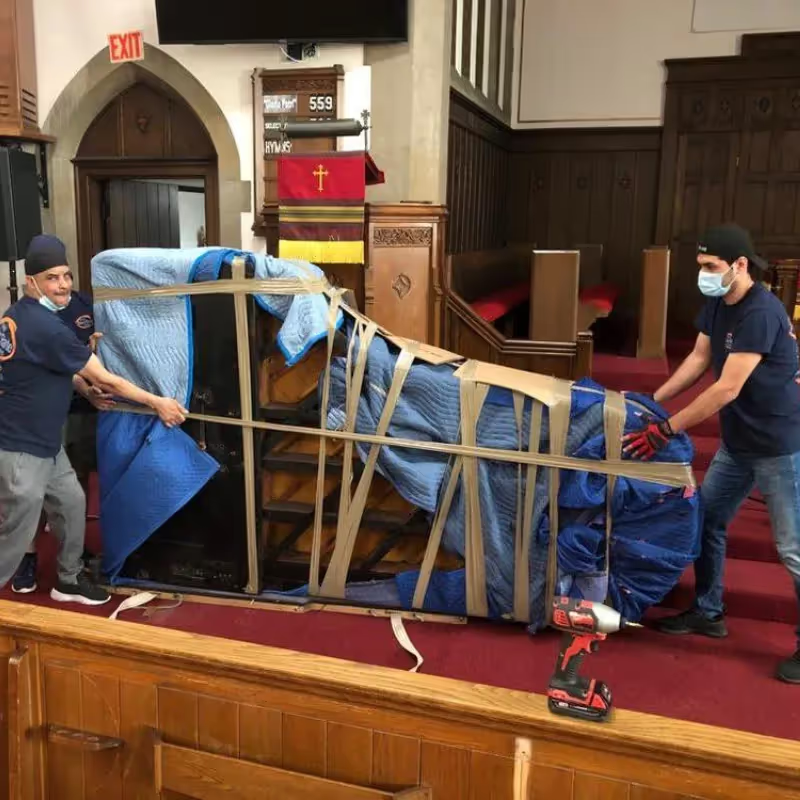
Long-distance moves can also be booked with hybrid options: a moving container (you pack, they haul) or a portable storage unit like PODS that you load yourself. These options cost significantly less than full-service movers — typically $1,500–$4,000 for most northeast corridor moves — but require you to do all the packing and loading work. For the cost-conscious mover who has time and help, containers are an excellent option. For customers who want professional packing, loading, and delivery, full-service movers offer peace of mind at a higher price. Whichever route you choose, book early, get everything in writing, and verify the mover's USDOT registration on the FMCSA website before handing over a deposit.

Michael Torres
The Boston Best Rate Movers team shares moving tips, Boston neighborhood guides, and cost-saving strategies drawn from 24+ years and 33,158+ completed moves across Greater Boston.
See All Posts