The short answer
The complete Boston walk-up moving playbook: how crews run stairs, packing adjustments, real costs with no stair fees, and the pros and cons.
The walk-up apartment is Boston's defining housing experience — and the walk-up move is its defining physical challenge. Triple-deckers, brownstones, and converted Victorians put most of this city's renters somewhere above a staircase, which is why walk-up technique is the core competency of any real Boston moving crew. This is the complete walk-up playbook: how the move actually runs, the equipment and packing adjustments that matter, what it costs (and the stair-fee trap to avoid), whether to hire help, and — for the apartment hunters — the honest pros and cons of walk-up living.
How a Professional Walk-Up Move Runs
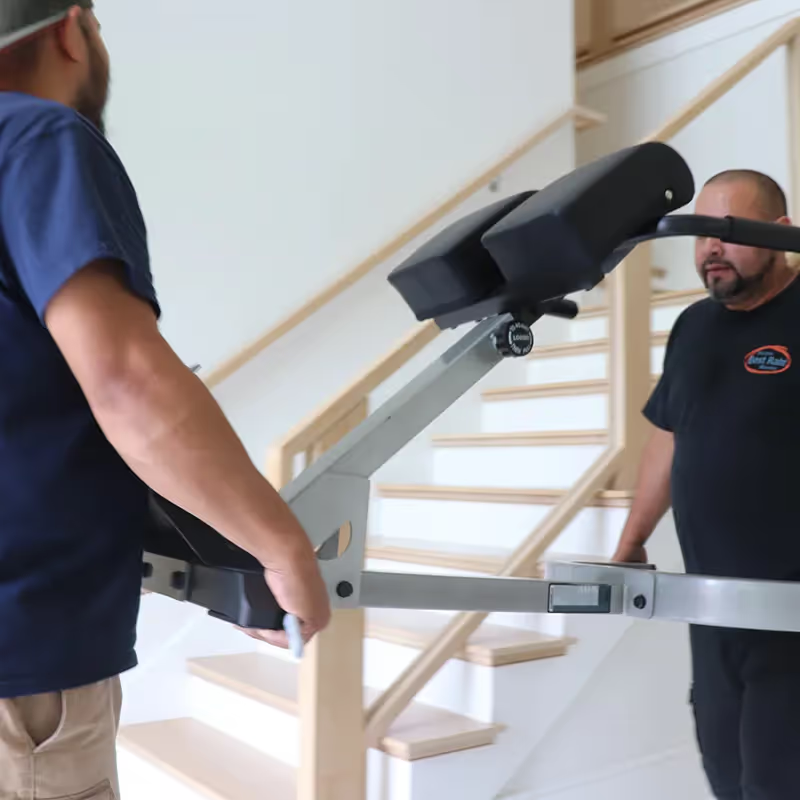
- Heavy furniture first, while the crew is fresh. The sofa and dressers climb at hour one, not hour five; boxes fill the rest of the day.
- One-way stair traffic: up loaded, down empty, in cycles — on a 30-inch staircase, passing lanes don't exist.
- A staging mover at the truck: on bigger walk-up jobs, one crew member stages and wraps at street level so the stair carriers never wait. Crew choreography is most of what you're paying for.
- The high-low carry on every heavy piece — the technique that makes a dresser climb safely. The full method (angles, grips, landing rests) is in getting heavy furniture upstairs.
- Building protection before the first carry: padded banisters, jamb guards, floor runners. Your security deposit and your neighbor's hallway both survive.
Packing for a Walk-Up: Different Rules
Every box you pack will be carried by a human up real stairs — pack accordingly:
- Smaller, heavier-rated boxes: 40 lbs max per box, books in small boxes only. The 60-lb wardrobe box that rolls fine on a dolly is a stair hazard.
- Closable tops, always — open-top totes and loose bags can't be safely carried on stairs and waste a hand.
- Disassemble more than you would for an elevator move: bed frames fully, table legs off, the couch stripped to its lightest form (the couch playbook).
- Label for the landing: the box's destination room matters more when each delivery costs a climb — nobody wants to re-carry a mislabeled box between floors.
What a Walk-Up Move Costs
Stairs add time, and time is the bill — a third-floor walk-up typically adds 30–60 minutes versus the same apartment with an elevator. What stairs should never add is a fee: per-flight stair charges ($50–$100/flight at some companies) are the single most Boston-hostile item in the hidden-fee taxonomy. We charge zero stair fees — a walk-up bills at the same $149–$219/hr as everything else, and you reclaim the stair-time cost through preparation: packed boxes, a permitted curb space that shortens the ground-floor leg, and the right crew size. On walk-ups specifically, the 3-mover crew at $179/hr almost always beats 2 movers at $149/hr on total cost — stair cycles parallelize.
DIY a Walk-Up? Read This First
The walk-up is exactly where DIY moves get expensive: furniture damage at the landing turn, wall gouges that eat deposits, and the injury risk of untrained stair carries (the safety limits are not decorative). The honest middle path: friends move your boxes, professionals move the staircase-hostile furniture inside the 3-hour minimum ($447 with 2 movers). Your back, your deposit, and usually your wallet come out ahead — the full comparison is in movers vs. DIY.
Living in a Walk-Up: The Honest Pros and Cons
For the apartment hunters weighing a walk-up lease:
- Pros: meaningfully lower rent than elevator buildings (often hundreds/month for the same square footage), more character (bay windows, original details, top-floor light), built-in exercise, quieter buildings (fewer units, no elevator hum), and often better neighborhoods-per-dollar — walk-ups are how people afford the South End and Beacon Hill.
- Cons: every grocery run is a workout; furniture and appliance deliveries get complicated (and some retailers' "delivery" ends at the front door — literally); moves take longer; strollers, injuries, and aging knees change the math over a lease's life; and top-floor units run hot in summer.
- The mover's tip for apartment hunters: walk the staircase like a sofa before signing — narrow turns and low landing ceilings will shape every furniture purchase you make. If the couch you own can't make the turn, the rent savings start with a furniture bill.
Walk-Up Moving FAQ
How much longer does a walk-up move take?
Rule of thumb: 15–25 minutes per flight over the same move with an elevator, less with a 3-person crew running cycles. A packed-and-ready third-floor 1-bedroom is still routinely a 3.5–4.5 hour job.
Do movers charge extra for a fourth or fifth floor?
Some charge per flight — ask before booking. We don't, at any floor. Stairs are Boston; charging for Boston is a choice.
Can large furniture even get up there?
Usually yes, with measurement and disassembly. When the staircase truly says no, window hoisting is a real professional option on many triple-deckers — discussed during the estimate, not improvised on move day.
What should I do before the crew arrives?
Boxes fully packed and staged by the door, stairwell lights working, the path clear of bikes-and-boots, and the curb reserved. Those four things are worth an hour on the invoice.
Walk-ups are our home game — thousands of triple-decker and brownstone moves, no stair fees ever, 1,244+ Google reviews. Get your free walk-up quote and we'll size the crew to the staircase.
Find our moving guides faster on Google
Add Boston Best Rate Movers as a preferred source and Google shows our answers first when you search — including in AI Mode.

Boston Best Rate Movers
The Boston Best Rate Movers team shares moving tips, Boston neighborhood guides, and cost-saving strategies drawn from 24+ years and 43,126+ completed moves across Greater Boston.
See All Posts