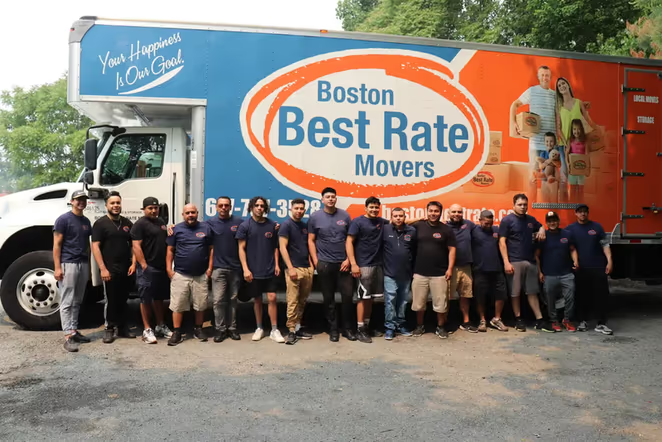
Booking a moving company without asking the right questions is one of the most common ways people end up with a bad moving experience. The questions you ask before signing a contract tell you more than any website or sales pitch. Start with the basics of legitimacy: Are you licensed and insured? What is your USDOT number? Can you provide a certificate of insurance? Are you registered with the Massachusetts Department of Public Utilities for in-state moves? A company that hedges or deflects on any of these questions is telling you something important. Legitimate movers have these answers memorized because customers ask them constantly. Next, ask: How long have you been in business? Who are the actual people doing my move — employees or subcontractors? Many companies hand moves off to subcontractors without disclosing this; you deserve to know who will actually be handling your belongings.
Financial and Pricing Questions
Move on to the financial questions, which is where most disputes originate. Ask: Is your quote binding or non-binding? What is included in the hourly rate — truck, fuel, packing materials? Are there fees for stairs, long carries, or elevator use? Is there a minimum charge? What happens if the move runs over the estimated time — is there a per-hour rate? What is your cancellation and rescheduling policy? Ask specifically about the "not-to-exceed" option if it is a non-binding estimate — this caps the maximum you will pay even if the job takes longer than estimated. Get all of this in writing before you sign. If a company is reluctant to put specific numbers in writing, that is a serious warning sign. Written contracts protect both parties and responsible movers welcome the accountability.
Insurance and Claims Questions
Insurance and claims questions are critical and often overlooked until after something goes wrong. Ask: What liability coverage do you provide? Is it the federal minimum (60 cents per pound) or full value replacement? How do I file a claim if something is damaged? What is the typical resolution timeline for a claim? Does your coverage extend to items you pack yourselves versus items the crew packs? Understand that if you pack your own boxes and something inside breaks, most movers will not cover it — that is standard and fair. But if the mover packs it and it breaks, that is a different matter. Ask whether additional insurance coverage is available for purchase and what it costs — some companies partner with third-party insurers to offer supplemental coverage for high-value moves.
Operational and Day-Of Questions
Finally, ask operational questions that affect your day-of experience: What is your arrival window and what happens if you are late? Who is my point of contact on moving day? How will I be notified if there are any changes? Will the same crew that loads the truck also unload it? For a long-distance move, what is the delivery window and how is it communicated? What do you do with furniture that does not fit through a doorway — do you have experience with disassembly and reassembly? These questions signal to the mover that you are organized and serious, and they often bring out the best in a company's communication. When you call Boston Best Rate Movers, we walk you through all of this upfront because we believe informed customers make for smoother moves — for everyone involved.

Michael Torres
The Boston Best Rate Movers team shares moving tips, Boston neighborhood guides, and cost-saving strategies drawn from 24+ years and 33,158+ completed moves across Greater Boston.
See All Posts