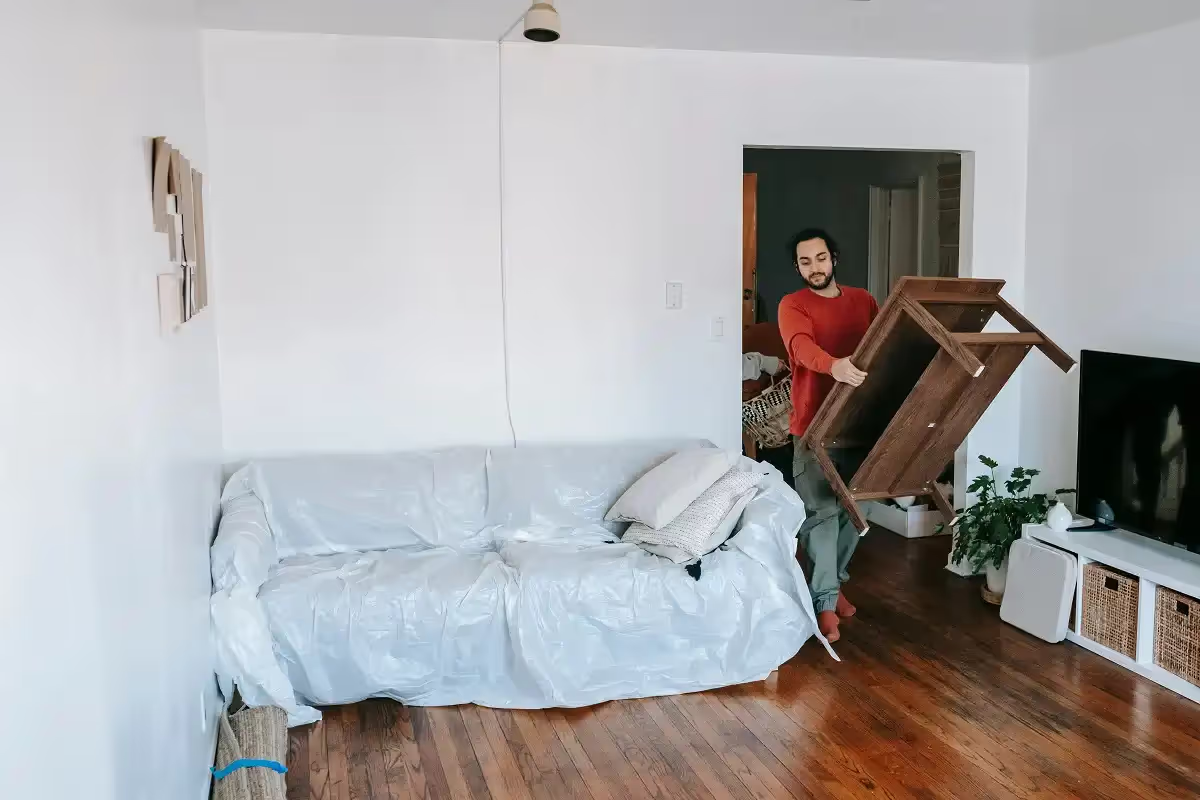
The decision to downsize is usually driven by one of a handful of life transitions: retirement, children leaving home, divorce, a desire to reduce costs, or simply the recognition that maintaining a large home is no longer worth the time and money. Whatever the reason, the move to a smaller home demands a fundamentally different approach from a standard move — because you cannot simply move everything and figure it out later. The destination space has fixed square footage, and every piece of furniture you bring must earn its place in the floor plan. The first and most important exercise is to obtain the floor plan of your new home and map out which pieces of furniture will physically fit. Do this with measurements before you start the emotional work of deciding what to keep — it immediately clarifies the conversation.
Furniture Decisions: What Fits and What Goes
The furniture and large item decisions are usually the hardest but also the most impactful. A sectional sofa that works in a 20-foot living room may be physically impossible in a 12-foot one. A king bed in a standard bedroom leaves no walking space. A dining table that seats ten has no place in a kitchen dinette. Make peace with the fact that some beloved pieces simply cannot make the move, and start planning for their second lives early. Good furniture sells quickly on Facebook Marketplace, Craigslist, or Chairish (for higher-end pieces). Estate sale companies can handle large volumes if you have significant furniture to clear. Donating large items to Habitat for Humanity's ReStore supports a good cause and may be tax-deductible. The earlier you list and plan these transitions, the less last-minute pressure you will face.
The One-Year Rule for Smaller Items
For the smaller items — books, kitchen supplies, decorative items, clothing — the framework that consistently works best is the "one-year rule" combined with the "use-per-year" test. Have you used this item in the past year? If yes, it is a keeper. If no, consider: would you buy it today if you did not already own it? If the answer is no, let it go. Apply this framework category by category, not room by room — do all books at once, all kitchen gadgets at once, all clothing at once. Processing by category gives you the full picture of how much of each type of thing you have and makes duplicates and redundancies immediately obvious. The goal is not minimalism for its own sake — it is to bring only the things that will be genuinely useful and meaningful in the new space.
Making a Smaller Space Feel Like Home
Once you have made your keep-or-release decisions, the actual move is often simpler than a full-scale household move — fewer items, often a smaller truck, faster loading and unloading. The challenge flips to the unpacking side: making a smaller space feel intentional rather than cramped. Vertical storage (tall bookshelves, wall-mounted cabinets), multi-functional furniture (ottomans with storage, fold-out desks), and ruthless editing of decorative items make the difference between a cozy smaller home and a chaotic one. Boston Best Rate Movers helps downsizing customers navigate the logistics of transitioning from large suburban homes to Boston apartments or South Shore condos regularly — including coordinating with donation pickups, junk haulers, and storage facilities when staging the departure requires multiple steps.

Michael Torres
The Boston Best Rate Movers team shares moving tips, Boston neighborhood guides, and cost-saving strategies drawn from 24+ years and 33,158+ completed moves across Greater Boston.
See All Posts