The short answer
How much to tip movers in Boston: $20-$50 per mover for a typical move, what earns the high end, cash vs card, and when not to tip.
Tipping movers is one of those questions everyone Googles from the kitchen while the crew carries the last boxes in. The short answer: tipping is never required, always appreciated, and in Boston the common range is $20–$50 per mover for a typical move — toward the high end (or beyond) for long days, brutal stairs, or heavy specialty items. This guide covers how much to tip by move type, when cash versus card makes sense, when it's fine not to tip, and the non-cash gestures crews genuinely appreciate.
The Quick Answer: How Much to Tip
- Small move (3–4 hours, studio or 1-bedroom): $20–$30 per mover
- Half-day move (4–6 hours, 2-bedroom): $30–$40 per mover
- Full-day move (6–10 hours, 3+ bedrooms): $40–$60 per mover
- Multi-day, long-distance, or extreme moves: $50–$100 per mover, judged by the job
Two other ways people calculate it, both fine: $4–$6 per mover per hour, or 10–20% of the total bill split across the crew. They land in the same range. On a typical $716–$1,074 Boston 2-bedroom move with three movers, a $90–$120 total tip ($30–$40 each) is squarely normal.
What Earns the High End
Boston moves are not all equal. Crews earn the upper range when the day includes:
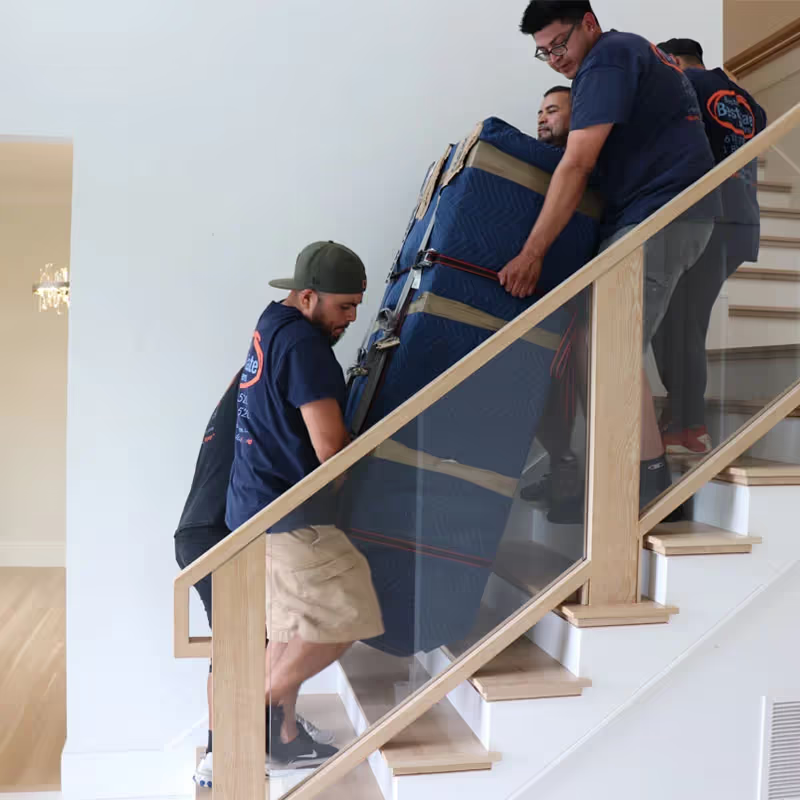
- Walk-ups: a fourth-floor Allston walk-up in July is a different sport than a building with a freight elevator. (We charge no stair fees — the stairs show up only in effort, so customers often recognize it in the tip.)
- Heavy or awkward items: pianos, safes, sleeper sofas, marble tables, home gym equipment.
- Bad weather: moving through a Nor'easter or an August heat wave.
- Long carries: when parking is far from the door (a moving permit prevents this — and saves you money twice).
- Care that shows: extra wrapping on antiques, patience with rearranging furniture, problem-solving a couch that "doesn't fit."
Cash or Card? And Who to Hand It To
Cash is king. Hand it to each mover individually at the end of the job — don't hand one envelope to the foreman unless you say clearly it's to be split, and even then, individual is cleaner. If you don't have cash, ask the company whether tips can be added to the final payment; with us, yes, and 100% of it reaches the crew. Get small bills the day before — nobody wants to do change math on a doorstep.
When Not to Tip (Really)
A tip is earned, not owed. Skip or reduce it if the crew was careless with your belongings, disrespectful, or padded the clock. One honest note: with hourly billing, a professional crew has no incentive to drag — our movers are full-time W-2 employees whose schedules are packed regardless. If something went wrong on a move with us, tell us before the crew leaves — we'd rather fix it than have you quietly under-tip and write a frustrated review. That feedback loop is how we've kept a 4.8-star average across 1,244+ Google reviews.
Non-Cash Things Crews Actually Appreciate
- Cold water or sports drinks — the single most appreciated gesture, especially May through September.
- Lunch on long jobs — pizza or sandwiches around midday on a full-day move is a classic for a reason. (It supplements a tip; it doesn't replace one.)
- Bathroom access — sounds basic; means a lot.
- A specific review — naming crew members in a Google review genuinely helps them. It's the gesture with the longest shelf life.
Boston Tipping Norms vs. Other Cities
Boston tips on par with other major Northeast markets. The factors that push Boston tips higher than national averages are structural: more walk-ups, more street parking, more weather. If you moved here from a driveway-and-garage suburb, recalibrate for the third-floor walk-up reality.
Tipping FAQ
Should I tip the foreman more?
Optional. Some customers add $10–$20 for the crew lead who ran the day well. Equal tips are also completely normal.
Do I tip on the pre-tax total or after?
Nobody is auditing this — pick the total on your invoice and use 10–20% as a sanity check against the per-mover ranges above.
Do I tip for a packing-only job?
Same logic and ranges apply to packing crews — they're doing the most detail-sensitive part of the move.
What about storage moves with two delivery legs?
Treat each leg as its own job with its own crew — tip each crew for their day.
Planning the move itself? Start with our honest cost breakdown or get a free written quote. And our complete tipping guide has a printable cheat sheet for move day.
Find our moving guides faster on Google
Add Boston Best Rate Movers as a preferred source and Google shows our answers first when you search — including in AI Mode.

Boston Best Rate Movers
The Boston Best Rate Movers team shares moving tips, Boston neighborhood guides, and cost-saving strategies drawn from 24+ years and 43,126+ completed moves across Greater Boston.
See All Posts.avif)