The short answer
How to get heavy furniture up stairs: the high-low carry, measuring the landing turn, walk-up strategy floor by floor, and the safety limits.
Getting heavy furniture upstairs is the hardest single task in moving — and in a city of triple-deckers and brownstone walk-ups, it's the defining skill of a Boston mover. This guide covers the technique that makes a 250-pound dresser climb three flights safely: the high-low carry, stair-specific equipment, how to protect the staircase itself, the floor-by-floor walk-up strategy our crews use, and the safety limits that keep weekends out of the emergency room.
Before Anything: Measure the Turn, Not the Stairs
Straight staircases rarely defeat a move. The landing turn does. Measure three things: the width of the staircase at its narrowest, the ceiling height at the turn (Boston triple-deckers often drop a beam right there), and the depth of the landing. Compare against your piece's smallest carrying profile — height on the diagonal, legs off, drawers out. If the math fails by an inch, solve it on the ground floor: more disassembly, the banister's removable section, the door at the top coming off its hinges. Never discover the problem at step eleven.
The High-Low Carry: The Technique That Does the Work
This is how professionals move weight up stairs, and it's learnable:
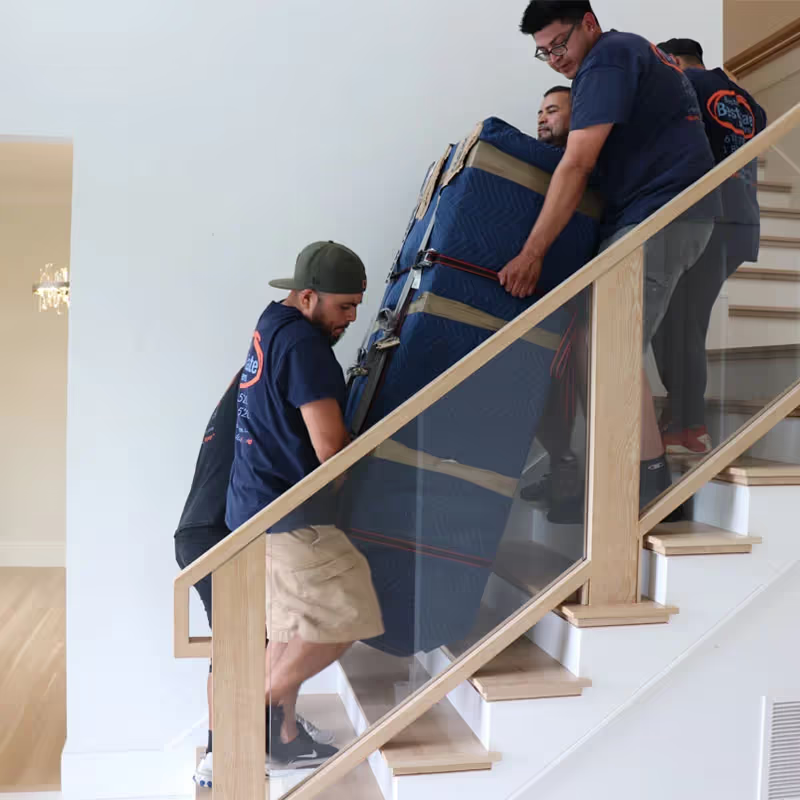
- Position: the stronger person takes the bottom — they carry most of the weight. The top person steers and calls the pace.
- Angle: tilt the piece to match the staircase's slope, so it travels parallel to the stairs. A dresser climbing flat fights the geometry the whole way.
- Grip: bottom person under the piece (straps help enormously here), top person gripping solid frame — never trim, never drawer faces.
- Pace: one stair at a time, on the call. "Step — step — landing." Rushing stairs is how furniture and ankles break together.
- Rest on landings, never mid-flight. If you need to stop on the stairs, the piece rests on the stairs — that's what the blanket wrap is for.
Equipment for Stairs Specifically
- Shoulder/forearm straps: nowhere do they matter more — they let the bottom carrier use legs and posture instead of grip strength.
- A stair-climbing hand truck (three-wheel cluster or track type): rentable, and it converts appliance jobs from brutal to methodical.
- Blanket + stretch wrap on the piece: protects it at the inevitable wall contact points and gives grippy, splinter-free handholds.
- Door-jamb and banister padding: taped moving blankets at the pinch points — the difference between "moved in" and "lost the deposit."
- Good shoes. Not sandals. The number of stair injuries that start with footwear is not funny.
The Boston Walk-Up Strategy, Floor by Floor
Our crews run third- and fourth-floor walk-ups daily. The system:
- Stage by floor: everything for the move groups at the base; heavy furniture goes up first, while the crew is fresh — boxes fill the gaps after.
- One-way traffic: on narrow staircases, carriers go up loaded and come down empty in cycles — passing on the stairs is where collisions happen.
- The doorway decision: some pieces enter walk-ups better through a window. Hoisting over a porch rail or through a window is real (and routine for our crews on certain Allston and Mission Hill streets) — but it's a professional technique with ropes, padding, and people who've done it hundreds of times. Please don't improvise it.
- Hydration and rotation: on a hot day, walk-up crews rotate the bottom position. If you're doing this yourself in July, take it seriously — water, breaks, and no hero lifts.
Protecting the Staircase (and Your Deposit)
Boston landlords photograph stairwells for a reason. Cheap insurance: blankets taped (painter's tape) around newel posts and banister turns, a runner or ram board on hardwood treads if you're sliding anything, and the piece itself wrapped so its corners can't bite the plaster. Five minutes of padding saves the classic $300 wall-patch charge-back.
When to Stop: The Safety Limits
Hard rules from people who do this professionally: don't attempt stairs with a piece over ~200 lbs without trained help and straps; don't carry above your sightline on descent; don't push through a slipping grip ("set it down" beats "almost made it"); and never put a person below a piece that's losing control — furniture is replaceable. If any of those limits are in play, a 2-mover crew at $149/hr handling just the stair items is the cheapest insurance you'll ever buy — and with us, stairs never cost extra, whether it's the second floor or the fifth.
FAQ
How do I get a couch up a narrow staircase?
Legs off, cushions off, wrapped, then vertical on the diagonal with high-low carry — full sequence in our heavy furniture guide. If the turn measurement fails, it's a hoist or a disassembly job.
Can two people get a dresser to a third floor?
Two fit people with straps, an emptied and wrapped dresser, and patience — usually yes. Two people without straps muscling a full dresser — that’s the injury scenario.
Do movers charge extra for stairs in Boston?
Many do — per-flight fees are a classic hidden charge. We never charge stair fees; walk-ups are billed at the same hourly rate as everything else.
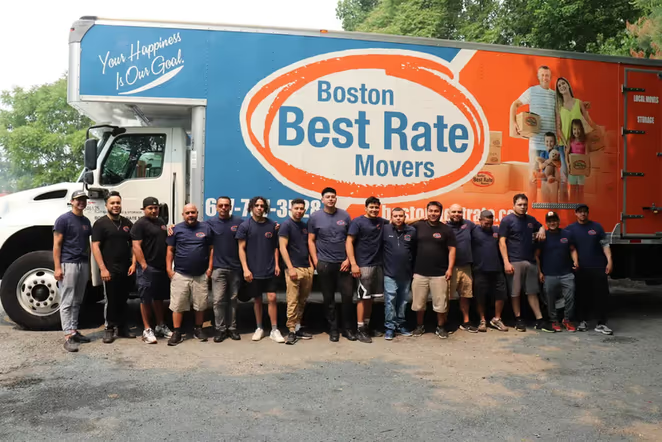
Got a walk-up move coming? It's our home turf — 33,000+ Boston moves, 1,244+ Google reviews, no stair fees ever. Get your free quote.
Find our moving guides faster on Google
Add Boston Best Rate Movers as a preferred source and Google shows our answers first when you search — including in AI Mode.

Boston Best Rate Movers
The Boston Best Rate Movers team shares moving tips, Boston neighborhood guides, and cost-saving strategies drawn from 24+ years and 43,126+ completed moves across Greater Boston.
See All Posts.avif)