Packing efficiently is one of the most overlooked ways to cut moving costs. Every additional box you fill takes up space on the truck, adds weight to the load, and increases the time movers spend loading and unloading — all of which can push your final bill higher than expected. The good news is that a few deliberate strategies can dramatically reduce how many boxes you need and how much space they occupy. Start by categorizing your belongings into three groups: items you will pack yourself, items that need professional packing, and items you can eliminate entirely. Decluttering before you pack is the single biggest money saver because you literally remove weight and volume from the equation. A family of four in the Boston area typically moves between 80 and 120 boxes; cutting that number by even 20 percent can shave an hour or more off your labor time and potentially free up enough truck space to downsize to a smaller vehicle.
Once you have pared down your inventory, focus on maximizing the interior space of every box. Professional movers call this "cubing out" — the goal is to fill each box completely so there are no empty voids that waste truck space and allow contents to shift during transit. Use soft items like towels, t-shirts, socks, and scarves as padding instead of buying extra bubble wrap. Wrap dishes in cotton dish towels, nestle spice jars inside winter boots, and stuff throw pillows into the gaps around heavier items. This dual-purpose approach eliminates the need for separate linen boxes and cuts your supply budget significantly. Label each box by room and provide a brief content description so movers can place boxes directly where they belong, avoiding time-consuming reshuffling at the destination.
Choosing the right box sizes also matters more than most people realize. A common mistake is packing books into large boxes — the result is a 70-pound cube that is nearly impossible to lift safely and may break open at the seam. Instead, use small boxes for heavy items like books, tools, and canned goods, and reserve large boxes for lightweight bulky items like pillows, lampshades, and stuffed animals. Medium boxes are ideal for kitchen gadgets, shoes, and bathroom supplies. If you are working with Boston Best Rate Movers, ask about our wardrobe box rental program so you can skip folding hanging clothes into boxes entirely. Wardrobe boxes keep garments wrinkle-free and can be returned after the move, saving you from buying disposable boxes that end up in the recycling bin.
Another cost-saving tactic is to use what you already own as containers. Suitcases, duffel bags, laundry baskets, dresser drawers, and even large pots can hold smaller items during transit. Leave clothes inside dresser drawers and simply wrap the entire dresser in moving blankets — this eliminates multiple boxes and keeps the dresser weighted for stability on the truck. Hampers and storage bins you already own count as boxes on the truck without adding any additional purchase cost. Trash bags work in a pinch for soft goods like bedding and stuffed animals, but avoid them for anything fragile because they offer zero impact protection.
Finally, plan your packing timeline to avoid the last-minute rush that often leads to haphazard box filling and unnecessary supply runs. Start packing non-essential items three to four weeks before your move date, tackle one room per day, and keep a running inventory on your phone. When moving day arrives, a well-packed household loads faster, fits more compactly on the truck, and unloads in an organized fashion — all of which translates directly into lower labor costs. Boston Best Rate Movers offers free in-home estimates so our team can assess your packing needs and recommend the most cost-efficient approach before you tape a single box shut.

Michael Torres
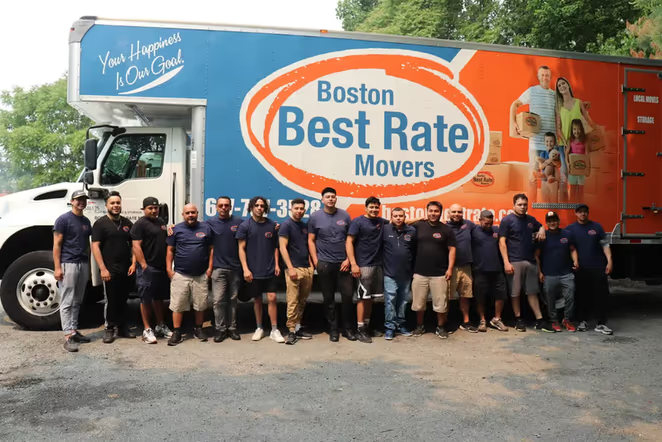
The Boston Best Rate Movers team shares moving tips, Boston neighborhood guides, and cost-saving strategies drawn from 24+ years and 33,158+ completed moves across Greater Boston.
See All Posts.png)